Discover what our patients have to say about their experience with Vision Scotland by reading our testimonials
An ectropion eyelid can affect one eye or both and is where either part or all of the lower eyelid turns outwards from the eye. This can cause the inner lining of the eyelid to become sore, irritated, and watery. Damage can also be done to the cornea if the eye isn’t able to close properly.
There are many causes of this condition but the most common is ageing. The condition is not usually serious but does cause some discomfort. Apart from affecting how the eye looks, the drooping eyelid may also disrupt the drainage of tears, adding to the irritation.
An entropion eyelid occurs when the eyelid rolls inwards. Typically, it affects the lower eyelid but it can also affect the upper lid. The main symptom of entropion eyelid is a discomfort caused by irritation from the eyelashes. This is because the inward roll of the eyelid results in the eyelashes rubbing against the eye.
The condition can be present from birth but is more commonly infection or age-related. Severe entropion can be quite painful and can cause damage to the cornea due to the irritation, occasionally resulting in vision loss. Eye drops can prevent the eye from becoming dry and may relieve symptoms, but surgery is usually required to permanently correct the condition.
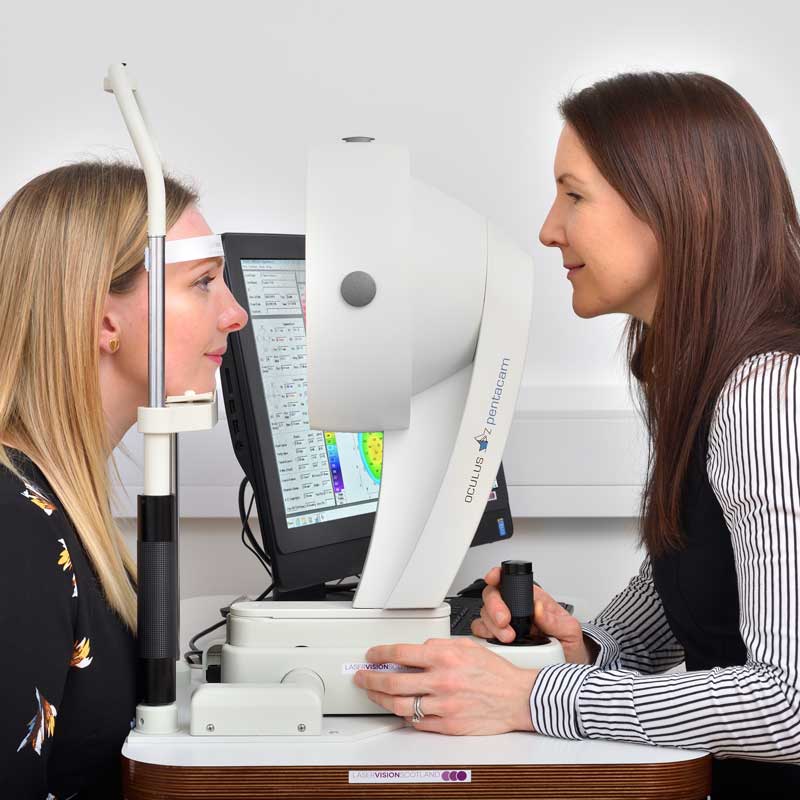
During a consultation with one of our specialists, you will be asked a series of questions about your vision and medical history, followed by a thorough examination of your eyes.
Surgery is usually required to correct the effects of ectropion/entropion eyelids, and the best results are obtained if the condition has not become too severe. The operation ‘tightens’ the skin and muscles around the eyelid, which should be sufficient to correct the problem if caught early, or a second operation may be required for severe cases.
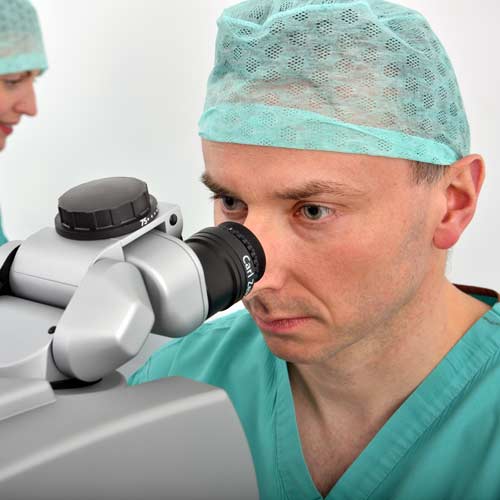
This is a relatively small operation and requires being in hospital for 3-4 hours, and a 30-minute operation, usually performed while you are awake. Local anaesthetic is gently used to numb the treated area.
After surgery, you will have some bruising and swelling and will be asked to apply antibiotic cream to the treated area for 1 – 2 weeks depending on prescription.
Beyond this, we encourage you to use a moisturiser to the healing skin for three months in order to achieve the best results. Bruising and swelling can be minimised with regular cold-compress packs, arnica cream and tablets, and sleeping more upright with extra pillows for the first few days. A short course of ibuprofen may also reduce swelling and discomfort.
By filling in this form you agree to share your information with Vision Scotland. We take privacy seriously, click here to read our privacy notice.